
💎 Article Content (Revised and Optimized)
I. Culture and Social Dynamics: The Silent Language of the Pin
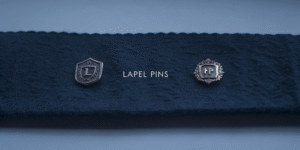
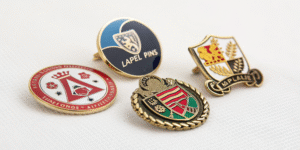
The lapel pin serves as an eloquent, non-verbal emissary in social settings. It is a highly condensed visual summary that transcends linguistic differences, demanding a momentary pause and attention. For centuries, its subtle placement has allowed individuals to signal affiliation, commemorate achievement, or champion an ideology with a singular, powerful emblem.
From Military Markers to Grassroots Mobilization
Historically, the pin’s roots are intertwined with military distinction and noble identifiers. Early forms, such as Roman phalerae, were ancient pins awarded for valor. This tradition evolved into medieval heraldry, where coats of arms and livery badges provided clear, visual markers of aristocratic standing and loyalty during major conflicts and peacetime.
The pin’s function broadened significantly in the modern era, becoming a key instrument for political and social activism. The affordable, mass-produced campaign pin, widely adopted in the 19th-century U.S., allowed messages to be broadcast directly to the masses. Today, pins bearing symbols for environmental causes, human rights, or various social justice movements function as mobile placards, giving the wearer an immediate yet subtle platform for public advocacy. By choosing to wear a pin, the individual embraces a form of intimate activism, turning their garment into a personal manifesto.
Beyond formal political use, pins are remarkable tools for fostering community. In diverse subcultures—spanning niche gaming fandoms, music scenes, and artistic movements—pins are utilized to confirm membership and advertise shared passions. A denim jacket or backpack covered in a curated pin collection is a visual résumé of the wearer’s interests, instantly communicating their values to observers. This universal symbolic shorthand facilitates rapid recognition and effortless connection at events, festivals, and specialized gatherings. The pin provides an accessible, non-threatening avenue for social initiation, effectively transforming the wearer’s apparel into a biographical map.
II. Collecting and Investment: The Value of Miniature Art
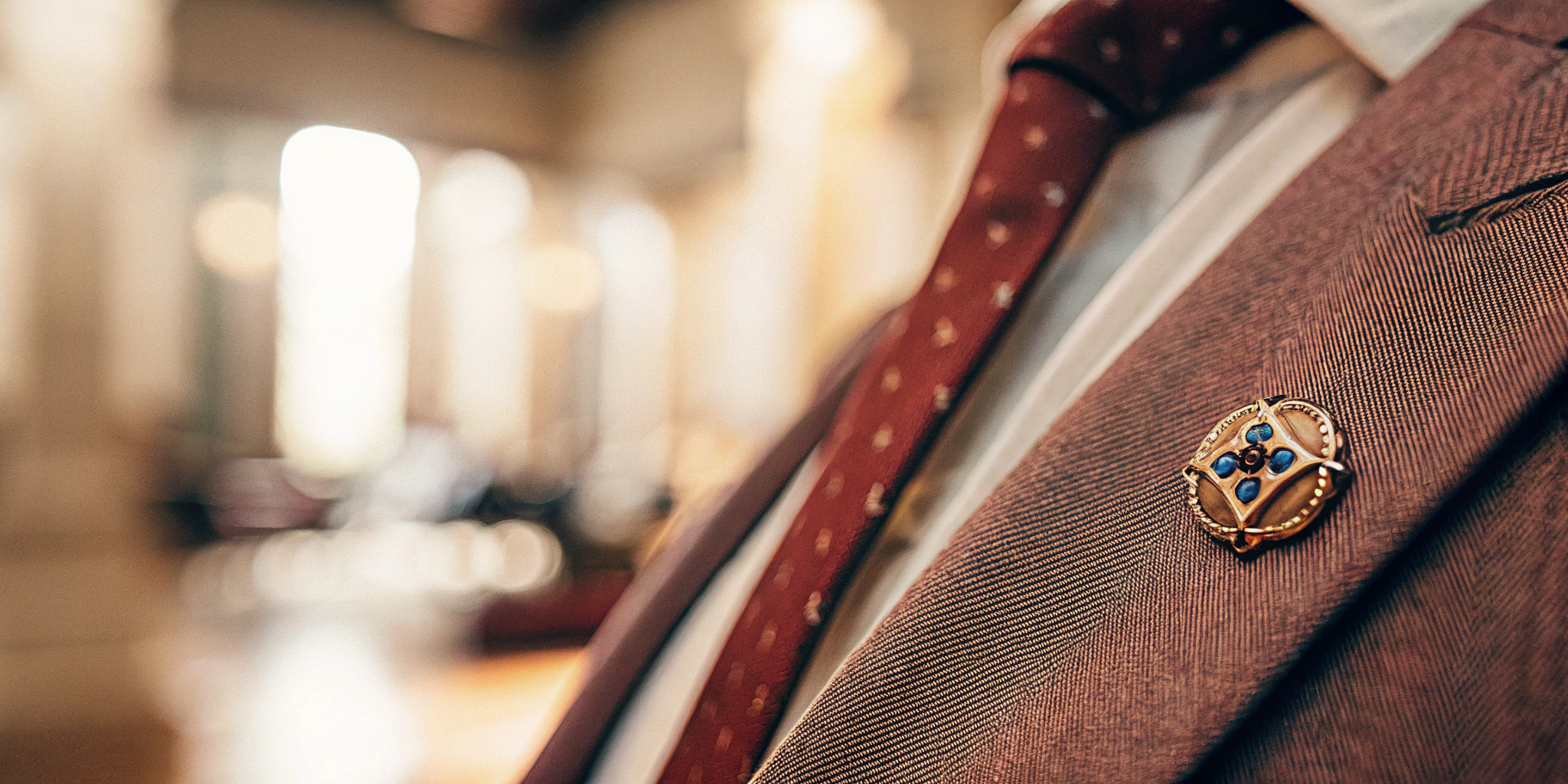
For serious enthusiasts and collectors, the lapel pin ascends beyond mere accessorizing; it represents a tangible slice of history and a potentially smart, alternative investment. The vibrant global community of "pin-trading" is energized by the thrill of acquisition, the aesthetic quality of design, and the confirmed scarcity of the pieces.
Niche Pin Markets and Investment Assessment
A pin’s true value is determined by a confluence of factors: its rarity, verifiable provenance, physical condition, and its inherent cultural moment. Dedicated collectors often focus on highly specialized segments, which can push prices for exceptional pieces into high-value territory:
- Global Sporting Events: Olympic pins are among the most actively traded globally. Pins created for specific media partners, official sponsors, or national team events, particularly those with low circulation, often hold significant long-term value.
- Pop Culture Collectibles: Disney pins, renowned for their intricate designs and strictly limited edition (LE) runs, sustain an extremely active secondary market. Specific series, like the coveted "Hidden Mickey" pins, are particularly sought after.
- Location-Specific Items: Pins from global restaurant chains or landmark attractions are valued precisely because acquiring them necessitates travel, lending credence and narrative to the collection.
When evaluating a pin for its financial potential, experts prioritize pristine condition (zero enamel damage or chipping), clear manufacturing stamps (for authentication), and confirmed numbering for limited runs. The best investment pins are often produced using high-end methods like Cloisonné or Hard Enamel, guaranteeing enduring visual integrity.
III. Business and Branding: Small Objects, Big Marketing
In the corporate sphere, the lapel pin serves as a strategic, multi-functional device for both internal team building and external market positioning. It offers a premium, high-impact alternative to bulkier, less memorable promotional materials.
Internal Motivation and Cultural Cohesion
Internally, pins are vital instruments for establishing and nurturing corporate culture. Utilizing pins to recognize employee anniversaries, sales targets, or successful project completions offers a structured path to celebration. This physical token of appreciation holds far more significance than simple digital praise, as the pin becomes a visible, wearable badge of merit shared with colleagues and clients. Tangible recognition of this kind strongly cultivates loyalty, pride, and a sense of collective ownership, all factors critical for reducing staff turnover. Pins can also discreetly communicate specific operational roles or language skills within massive, complex organizational structures.
External Visibility and Quality Perception
Externally, a finely finished pin, typically bearing the company logo or a simplified brand signature, functions as an upscale giveaway or a thoughtful accessory. Unlike generic print marketing, the pin possesses an intrinsic, lasting perceived value, making customers far more inclined to retain and display it. This repeated, visible exposure on everyday items—backpacks, lanyards, or jackets—significantly amplifies brand visibility and improves long-term recall. Pins produced using premium materials like solid brass and hard enamel subtly convey that the brand is meticulous and dedicated to quality, which indirectly elevates the perceived value of their primary offerings. The lapel pin acts as an eloquent, miniature brand ambassador.
IV. Fashion and Styling: The Aesthetics of Detail
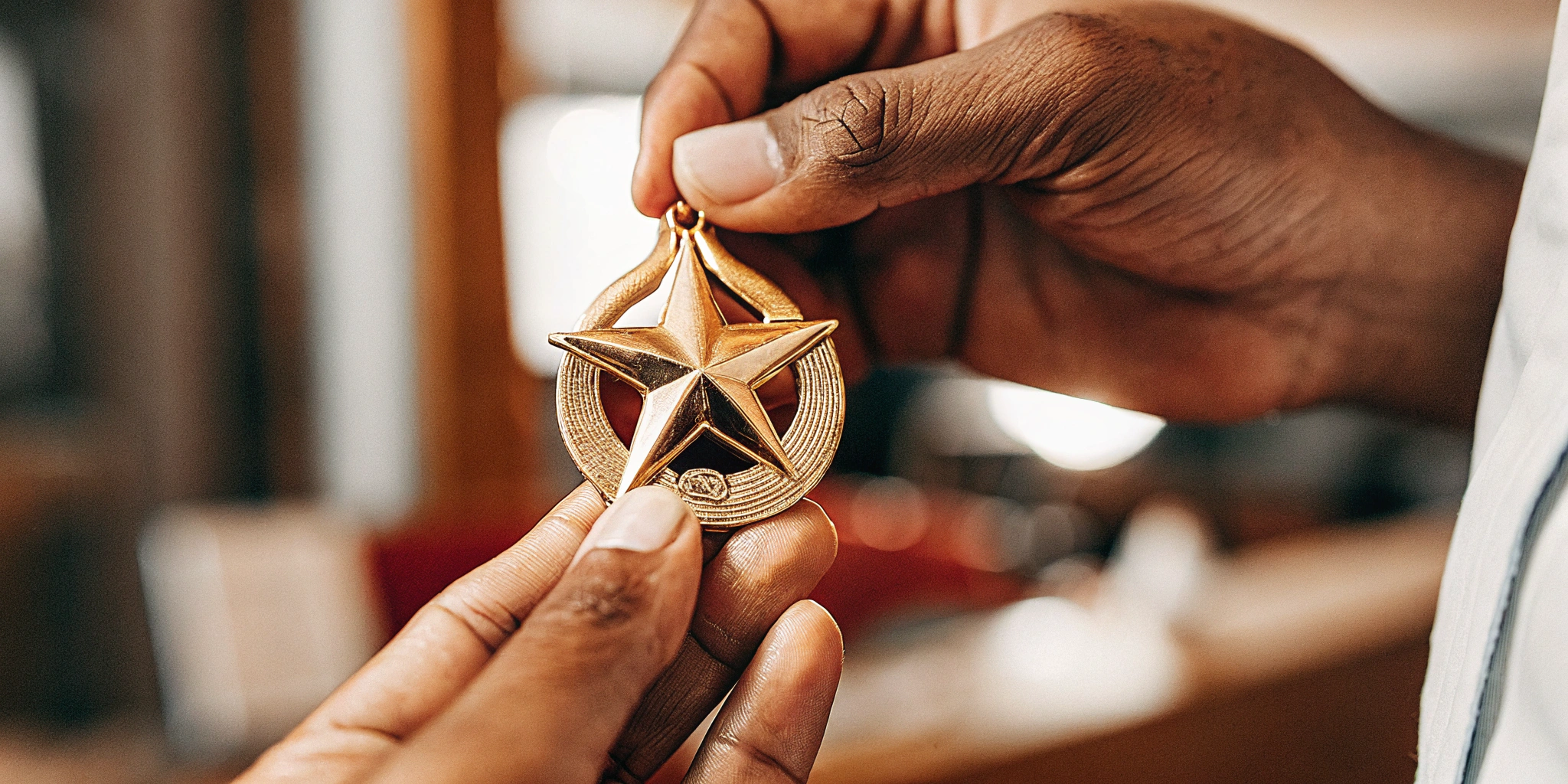
The lapel pin has undergone a dramatic resurgence in contemporary fashion, moving decisively beyond the domain of conservative formalwear to become a flexible tool for personal expression. Successful pin styling hinges on a keen understanding of textural harmony, color balance, and scale.
Advanced Formal and Business Pairing
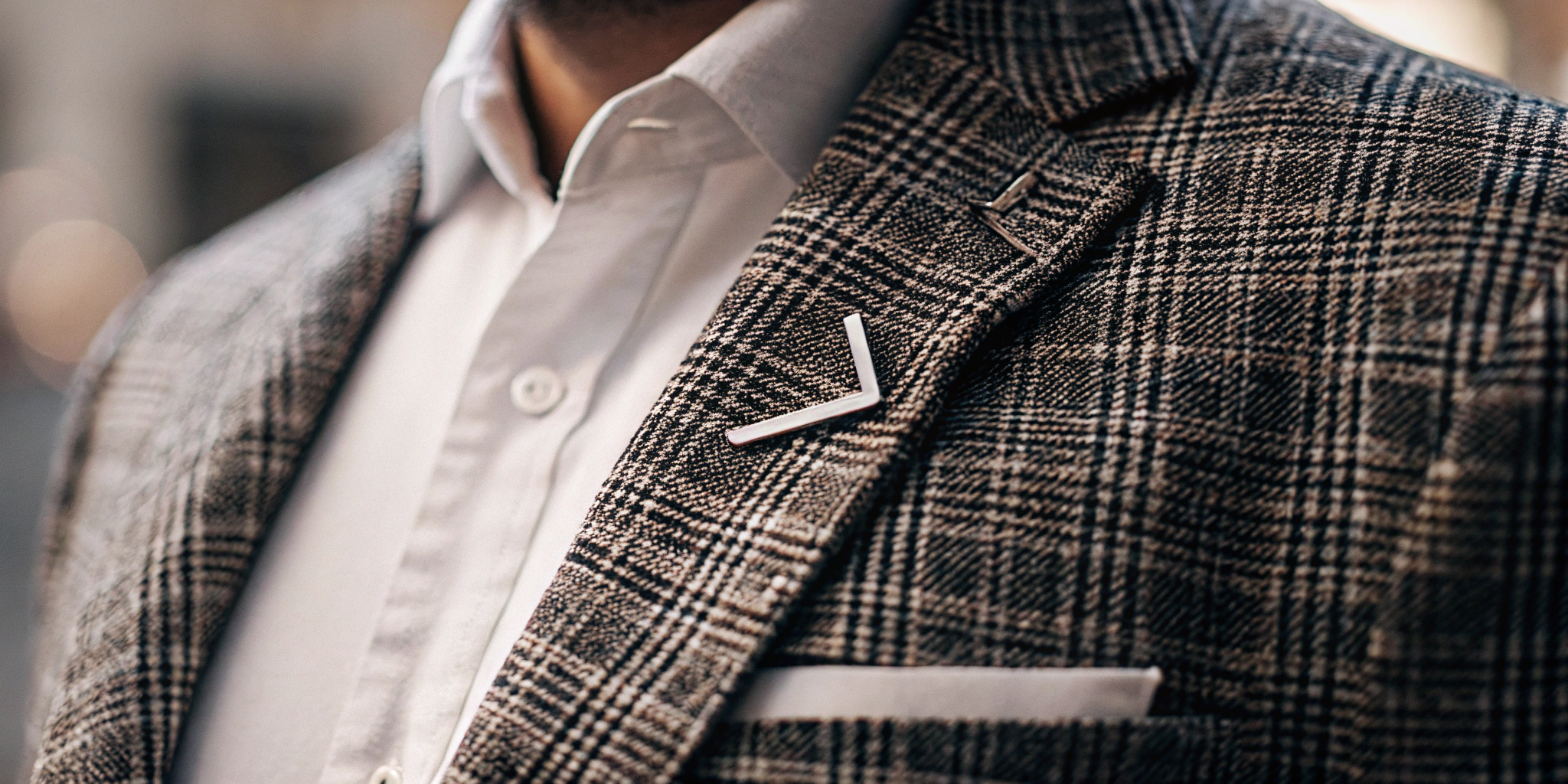
When accessorizing a suit, the pin should generally be kept small (ideally under 1.5 inches or 38mm) and must align with the formality of the attire. For corporate environments, appropriate choices include a restrained metal pin with an abstract geometric form or a classic, subtle silk boutonnière. The traditional placement remains the left lapel buttonhole. The choice of pin material is crucial for complementing the garment’s texture:
- Heavier Fabrics (Tweed or Flannel): Best paired with pins that offer deep texture, such as soft enamel finishes, natural wood, or oxidized metal.
- Smooth Fabrics (Worsted Wool or Silk): Require highly polished elements, such as precisely die-struck metal or mirror-finish hard enamel, to reflect the fabric’s smooth sheen.
The pin should enhance the look, not overwhelm it. If the tie or shirt is highly patterned, the pin should offer visual restraint; conversely, on a solid suit, the pin is the perfect place to introduce a bold focal point of color or intriguing texture.
Casual Styling and the Art of Clustering
In casual settings, the rules are significantly relaxed. Pins are versatile enough for almost any accessory: denim jackets, canvas bags, hats, or even collars of casual shirts. This freedom introduces the concept of clustering. Effective pin clusters should adhere to a unifying, albeit loose, theme (e.g., all nature-based, all mid-century graphics) or maintain a cohesive color narrative. To ensure a cluster appears deliberate and curated:
- Vary Dimensions: Integrate small, medium, and large pins to provide visual depth and interest.
- Mix Textures: Combine glossy metal finishes with matte resin, rubber, or embroidered elements.
- Tight Grouping: Arrange the pins in a small, dense formation rather than scattering them across a wide surface area, which can look haphazard.
This versatile approach allows maximum creative freedom, transforming everyday garments into a dynamic and personalized canvas of taste.
V. Future and Innovation: The Convergence of Technology and Customization
The future trajectory of the lapel pin is marked by a powerful convergence of advanced manufacturing techniques, modern material science, and digital interconnectivity, propelling the accessory far beyond its traditional decorative function.
Smart Pins and Digital Utility
The next generation of pins, dubbed ‘smart pins,’ will embed micro-technology within the familiar lapel form. These intelligent pins will leverage NFC (Near Field Communication) or integrated Bluetooth to execute sophisticated functions:
- Instant Networking: Tapping the pin to a smartphone to instantly transfer V-cards, digital portfolios, or social media handles.
- Secure Access: Serving as an encrypted, wearable key or secure access badge for restricted areas or exclusive events.
- Augmented Reality Activation: Acting as a physical trigger that, when scanned by a camera, launches a unique augmented reality experience, overlaying rich digital content onto the real-world view.
These digital capabilities fundamentally redefine the pin, shifting it from a static symbol to an active, functional extension of the wearer’s dynamic digital presence.
Advanced Crafting and Sustainable Sourcing
The advent of ultra-high-resolution 3D printing and precision laser etching allows designers to achieve astonishing levels of complexity and detail previously unattainable with traditional stamping methods. Furthermore, the industry is increasingly focused on ecological responsibility:
- Eco-Conscious Materials: The adoption of recycled precious metals, sustainable bamboo, ethically sourced wood, and advanced bioplastics is growing to meet the demands of the environmentally aware consumer.
- Longevity in Design: There is a renewed focus on durable finishes and closed-loop, zero-waste production models.
As consumer appetite for bespoke personalization continues to accelerate, these technological advancements will enable truly unique, one-of-a-kind customizations, empowering individuals and brands to create highly valuable, portable, and programmable artifacts that faithfully reflect their values and distinct aesthetics.
VI. The Enduring Appeal: A Conclusion
The remarkable journey of the lapel pin—from a badge of ancient military rank to its current status as a sophisticated, versatile accessory—highlights its unparalleled efficacy as a condensed medium of communication. It resides in the subtle space between an individual’s carefully chosen garment and their core identity. In a world oversaturated by the fast pace of digital information, the pin provides a welcome, tangible, and uniquely personal point of connection.
The pin’s deliberate miniature scale is arguably its greatest asset; it compels the observer to focus, rewarding closer scrutiny with intricate details of craftsmanship, historical context, or subtle humor. It represents an investment in personal narrative, a piece of portable heritage, and a silent, effective mediator in both social and professional environments. By recognizing the extensive scope of its applications—whether on a collector’s trading board or the lapel of a major corporate figure—we learn to appreciate the pin not just as a passing fashion accessory, but as an evolving cultural artifact with an enduring future.
VII. Practical Pin Care and Troubleshooting
To ensure your investment and expressive pieces maintain their integrity and value for decades, meticulous care and handling are mandatory. Lapel pins, particularly those utilizing soft enamel or delicate metal plating, require specific maintenance and storage routines.
Gentle Cleaning and Preservation
Pins must always be cleaned gently to prevent scratching the metallic finish or causing chips in the enamel coating.
- Enamel Surfaces: Use a very soft, lightly dampened cloth (a microfiber cloth is ideal) to wipe the pin’s surface. Crucially, avoid harsh chemical cleaners or fully submerging the pin, as moisture can degrade adhesives, penetrate seals, and potentially cause rust, particularly within the pin’s backing mechanism.
- Metal Finishes: For high-polish finishes like brass or gold plating, a quick buff with a non-abrasive jewelry cloth can restore shine. For pieces with intentional antique or oxidized finishes, avoid aggressive polishing altogether, as the acquired patina is often a critical element of its aesthetic and collectible value.
Troubleshooting Common Issues
| Issue | Root Cause | Effective Solution |
|---|---|---|
| Pin repeatedly detaches | Reliance on standard butterfly clutch; pin is excessively heavy. | Immediately upgrade the attachment to a robust Deluxe Locking Clutch or a heavy-duty Rubber Clutch for superior grip and security. |
| Enamel color shift or dullness | Extended UV exposure or contact with chemicals (e.g., strong cologne, hairspray). | Store your collection away from direct light. Ensure no fragrance or cosmetic aerosols are applied directly near the pinned garment area. |
| Pin creates holes/snags on fabric | Sharp, rigid post backing or inappropriate fabric choice. | Utilize high-strength Magnetic Backings on highly delicate materials (like chiffon or fine silk) to eliminate puncture damage and minimize abrasion risk. |
Optimal Storage Strategies
For long-term preservation, always store your pin collection flat in dedicated display cases, or secured onto archival-quality canvas or felt boards. Crucially, avoid piling pins on top of each other, as the sharp metal components on the reverse side can easily scratch and devalue the enamel surfaces of adjacent pins. For collectible and high-value pieces, individual plastic sleeves or specialized archival bags are strongly recommended to protect against atmospheric moisture and contaminants.