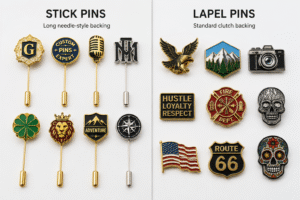
Struggling with high costs and slow delivery when ordering pins? Profit margins shrink when supply chains fail. I will show you how to manufacture pins quickly and profitably.
To make custom lapel pins in bulk, you start with a vector design, create a custom mold, and die-cast the metal. Then, workers apply enamel colors, polish the pins, and add the backings. Choosing the right factory ensures high quality and low costs.
Let us explore the step-by-step process. You will learn how to choose the best options to save money and keep your customers happy.
How Custom Lapel Pins are Made: From Artwork to Casting?
Bad designs lead to ugly pins. You waste money if the factory gets the mold wrong. I fix this by using a clear and simple manufacturing process.
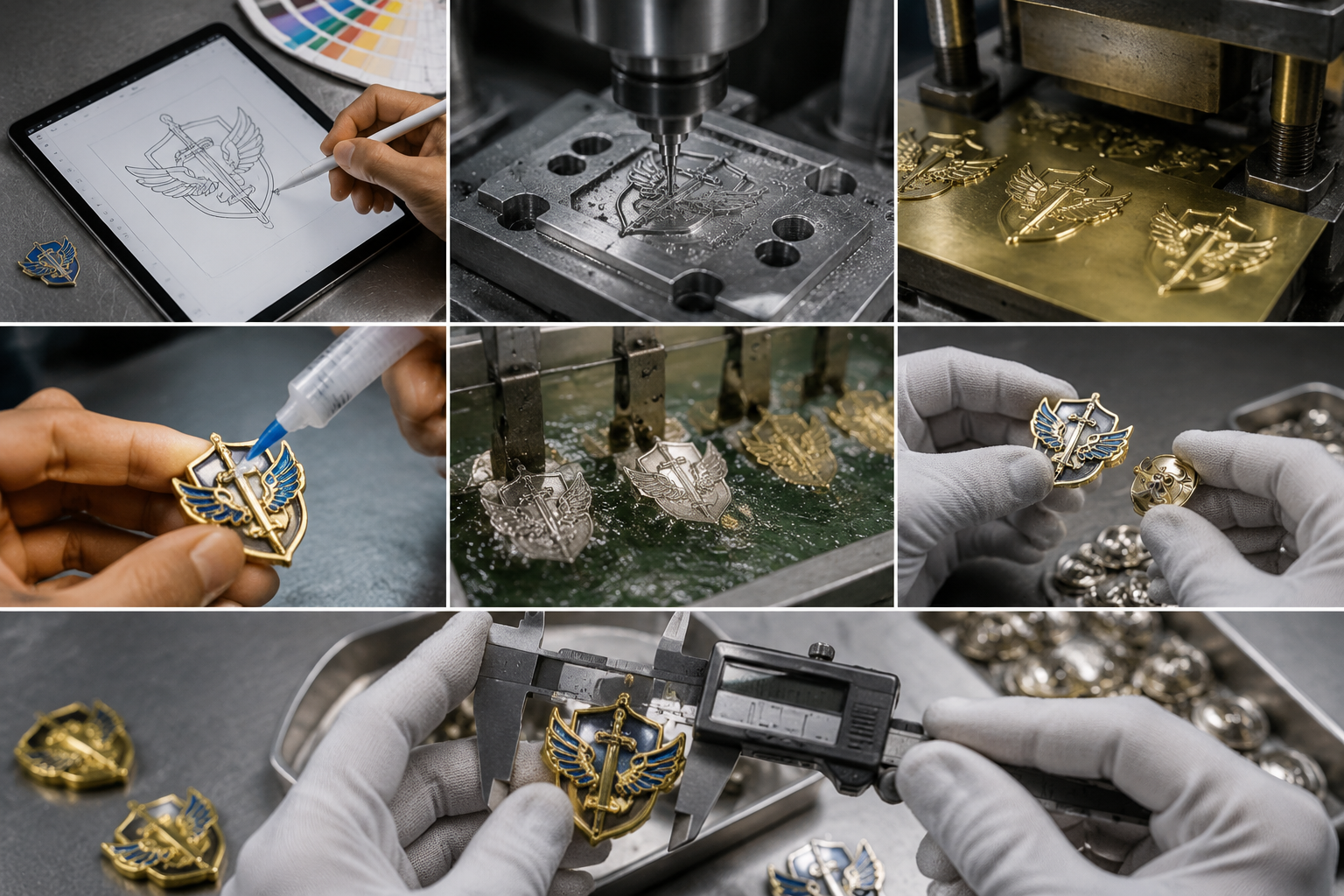
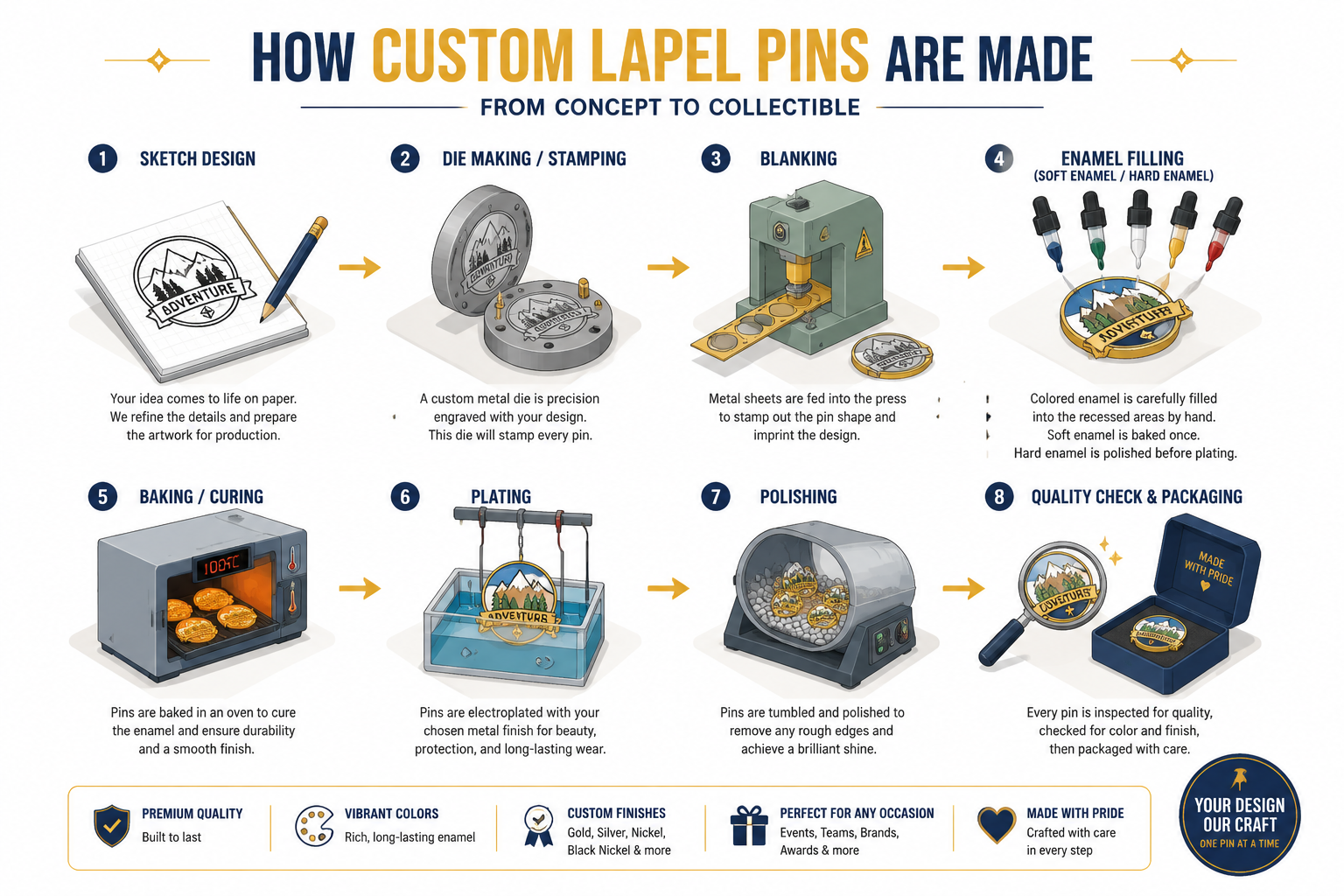
Making custom lapel pins starts with digital artwork. The factory uses this art to cut a steel mold. We then use die-casting machines to press melted zinc alloy or brass into the mold.1 This creates the exact shape of your lapel pin.
Many buyers think the hardest part of making pins is the design. I know that solo distributors often lack a design team. This is a big problem when clients want complex logos. At challengeCoinsBD, we solve this by offering free artwork and design help. We take your rough idea and turn it into a production-ready vector file. We make sure the design fits the physical limits of metal and paint.
After we finish the artwork, the real work begins in our factory. We make a CNC mold. The CNC machine cuts the design into a hard steel block. This mold must be perfect. If the mold has a small error, every single pin will look bad. We inspect every mold carefully.
Next, we move to the die-casting step. We inject hot metal into the steel mold under high pressure. We usually use zinc alloy because it captures tiny details very well. We also use brass for some high-end orders. You can see the basic steps in this table:
| Step | Action | Purpose |
|---|---|---|
| 1. Artwork | Create vector file | Sets the exact layout and colors |
| 2. Molding | Cut steel with CNC | Creates the physical stamp |
| 3. Casting | Inject hot metal | Forms the raw metal pin body |
This process gives us a raw metal pin. We trim the extra metal edges. It is now ready for colors and finishing. As a one-stop factory with over 1000 employees, we control every single step.
Soft vs. Hard Enamel Lapel Pins: Which Finish is Best?
Choosing the wrong enamel ruins your pin design. Your clients will complain if the finish feels cheap. You must pick the right enamel for your specific project.
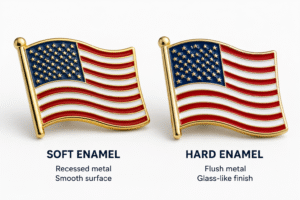
Soft enamel pins have raised metal edges and recessed paint, giving a textured feel.2 Hard enamel pins are polished flat, creating a smooth and highly durable surface. Soft enamel is cheaper, while hard enamel offers a premium, jewelry-like finish.
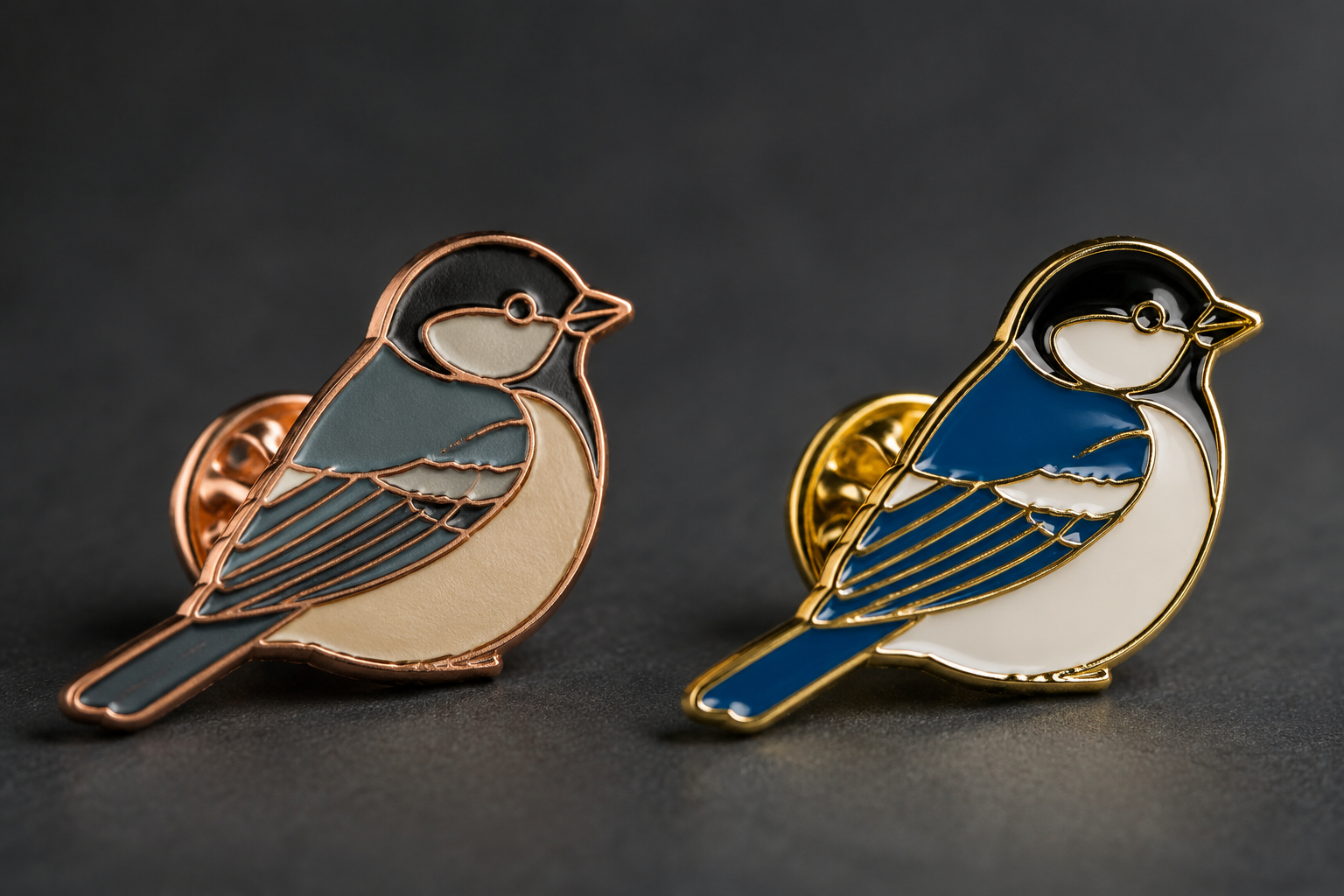
I always ask my B2B clients what their end customer wants. If the customer wants a cheap promotional item, soft enamel is the best choice. Soft enamel lets you feel the metal borders. We fill the recessed areas with paint, but we do not fill them all the way to the top. We bake the pins to cure the paint. This process keeps the cost low.
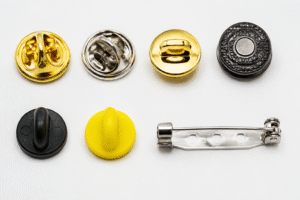
If your client is a high-end company, you need hard enamel. We overfill the pin with color and bake it at a very high heat. Then, we polish the surface until the paint and the metal borders are completely flat. This makes the pin look like real jewelry. We also add backings like a butterfly clutch or a rubber clutch at this stage.
Here is how you can compare the two styles:
| Feature | Soft Enamel | Hard Enamel |
|---|---|---|
| Surface Feel | Textured (raised metal) | Smooth and flat |
| Durability | Good | Excellent |
| Cost | Lower | Higher |
| Best For | Giveaways, events | Corporate gifts, awards |
We do all this auto-coloring and polishing in-house. We control the quality at every step. We make sure every color perfectly matches your client’s brand. You do not need to worry about bad paint jobs.
Ordering Bulk Lapel Pins: Avoiding Tariffs and Shipping Delays?
US-China tariffs destroy your profit margins. Chinese New Year delays make you miss tight deadlines. You need a better sourcing strategy to protect your business.
To avoid tariffs and delays, source your bulk pins from a factory outside of China. Ordering from Bangladesh completely removes US-China import tariffs. You also avoid factory shutdowns during the Chinese New Year, ensuring fast and continuous production year-round.
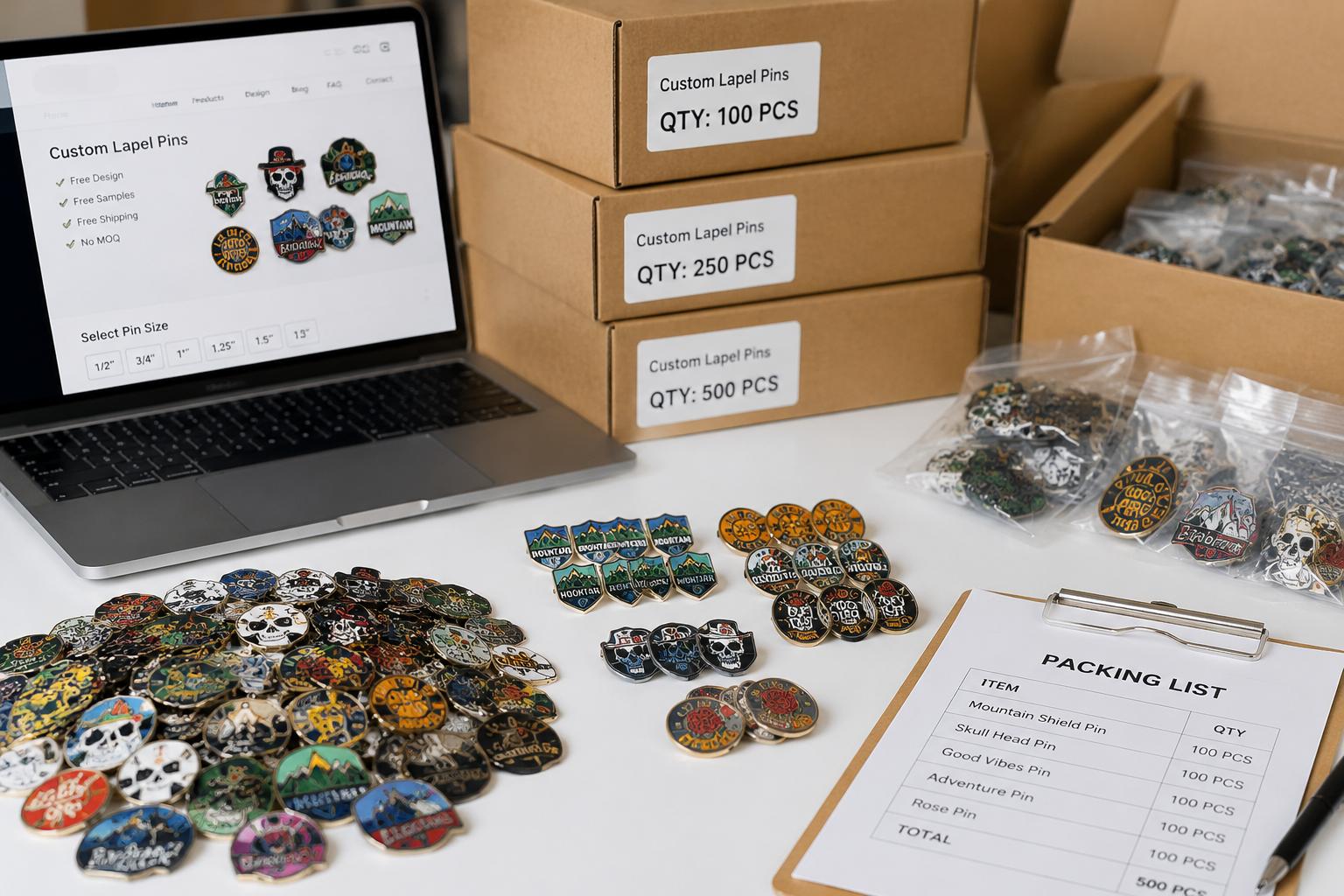
This is the most critical part of my sourcing advice. I see many old distributors lose money because they only buy from China. The tariffs eat up their profits. I run challengeCoinsBD from the Comilla Export Processing Zone in Bangladesh. Because we ship from Bangladesh, you pay zero extra tariffs when you import to the United States. This instantly lowers your cost. You keep more money in your pocket.
Another huge problem is the Chinese New Year. Chinese factories close for weeks. Your orders get stuck. We do not have this holiday in Bangladesh. We maintain normal production all year long. This gives you a massive advantage. I recall a client who won a huge corporate order in February simply because we were the only factory that could deliver on time. You can take orders when your competitors cannot deliver.
We also offer a fast 15-day mass production time and 5-7 day express shipping via UPS, FedEx, or DHL. You get a reliable supply chain. Here is why this matters:
| Sourcing Problem | China Factory | challengeCoinsBD (Bangladesh) |
|---|---|---|
| Tariffs to USA | High (up to 25%+) | Exempt / Very Low |
| Feb/March Delays | Yes (Chinese New Year) | No (Open all year) |
| Labor Costs | Rising | Highly competitive |
You get high-quality pins, keep your margins high, and deliver on time. We give you a complete manufacturing solution.
Conclusion
Making bulk lapel pins requires precise casting and coloring. Sourcing directly from Bangladesh gives you lower prices, zero tariff headaches, and reliable delivery all year round.
-
"The Processes and Advantages of Zinc Die Casting – IQS Directory", https://www.iqsdirectory.com/articles/die-casting/zinc-die-castings.html. Sources on die casting describe a process in which molten metal is injected under pressure into metal molds and note that zinc-based alloys (e.g., ZAMAK) are commonly used for small, detailed castings; some manufacturers also use brass for higher-end decorative pieces. Limitation: industry practices and exact alloy choice vary by supplier and by part requirements. Evidence role: mechanism; source type: encyclopedia. Supports: We then use die-casting machines to press melted zinc alloy or brass into the mold.. Scope note: Industry practices and exact alloy choice vary by supplier and by part requirements. ↩
-
"Soft Enamel vs Hard Enamel Pins | The Differences – Wizard Pins", https://wizardpins.com/blogs/blog/whats-the-difference-between-soft-enamel-and-hard-enamel-custom-pins?srsltid=AfmBOoqrEQX_jxgOOltavQynwEsOiZ-2MjhUYIaOg6gMi40tTxnnFrTE. References on traditional enamel techniques (e.g., champlevé/cloisonné) describe recessed areas filled with enamel and raised metal partitions, which supports the statement that many soft‑enamel pins have raised metal edges and recessed paint producing a textured feel; note that modern pin‑manufacturing adaptations mean not all makers use identical methods. Evidence role: definition; source type: institution. Supports: Soft enamel pins use recessed enamel with raised metal edges, creating a textured feel.. Scope note: Historical decorative‑enamel techniques inform the physical description, but individual pin manufacturers may use variations of these methods. ↩