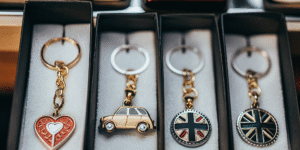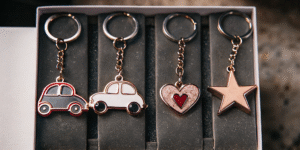

Not all "metal" keychains are created equal. The base metal you choose determines the weight, shape, and durability of the final product.
The Metal Hierarchy:
- Zinc Alloy: The Industry Standard. Injection molded. Allows for Internal Cutouts (holes) and 3D sculpting. No rust.
- Iron: The Budget Option. Stamped (like a coin). cannot have internal holes. Magnetic. Prone to rusting if the plating chips.
- Brass: The "Jewelry" Option. Heavy, expensive, rarely used for keychains (mostly for military coins).
Technical Score: Expert. Understanding these materials prevents you from ordering a "cheap feeling" product that tarnishes in a month.
I. The Base Metal Wars: Zinc Alloy vs. Iron
When you ask a factory for a quote, they might ask: "Zinc or Iron?" Here is how to choose.
Zinc Alloy (The Sculptor)
- Process: Molten zinc is injected into a steel mold.
- Superpower: Cutouts. If your character has a gap between their arm and body, Zinc can create that empty space. It can also create "3D" rounded surfaces (like a relief sculpture).
- Feel: Lighter than brass but harder than lead. It holds crisp details.
- Verdict: Use this for 90% of custom keychains.
Iron (The Disc)
- Process: A heavy steel die slams into a sheet of iron.
- Limitation: It cannot cut holes inside the design. It can only cut the outer perimeter. You are forced to have solid metal between the arm and body.
- Verdict: Only use Iron if you are on a strict budget for a simple, round logo keychain.
II. The Rainbow Revolution: Anodized Metal
You have seen those "Oil Slick" or "Holographic Metal" keychains. They are not painted; they are electrified.
Anodized Plating
- The Look: A shifting gradient of purple, blue, green, and gold directly on the metal lines.
- The Chemistry: It is an electrochemical process.
- The Constraint: This usually works best with Soft Enamel. The contrast between the raised rainbow metal and the recessed black enamel is stunning.
- Design Tip: Use this for "Magical," "Space," or "Cyberpunk" themes. It looks out of place on a vintage design.
Dyed Black Metal
- The Look: Matte black finish (not shiny gunmetal).
- Durability: This is actually a coating, not a true electroplate. It can chip if keys scratch it aggressively, revealing the copper color underneath.
- Use Case: Perfect for "Edgy" or "Streetwear" designs where you don’t want the glare of gold/silver lines.
III. Breaking the Resolution Limit: Silk Screen Printing
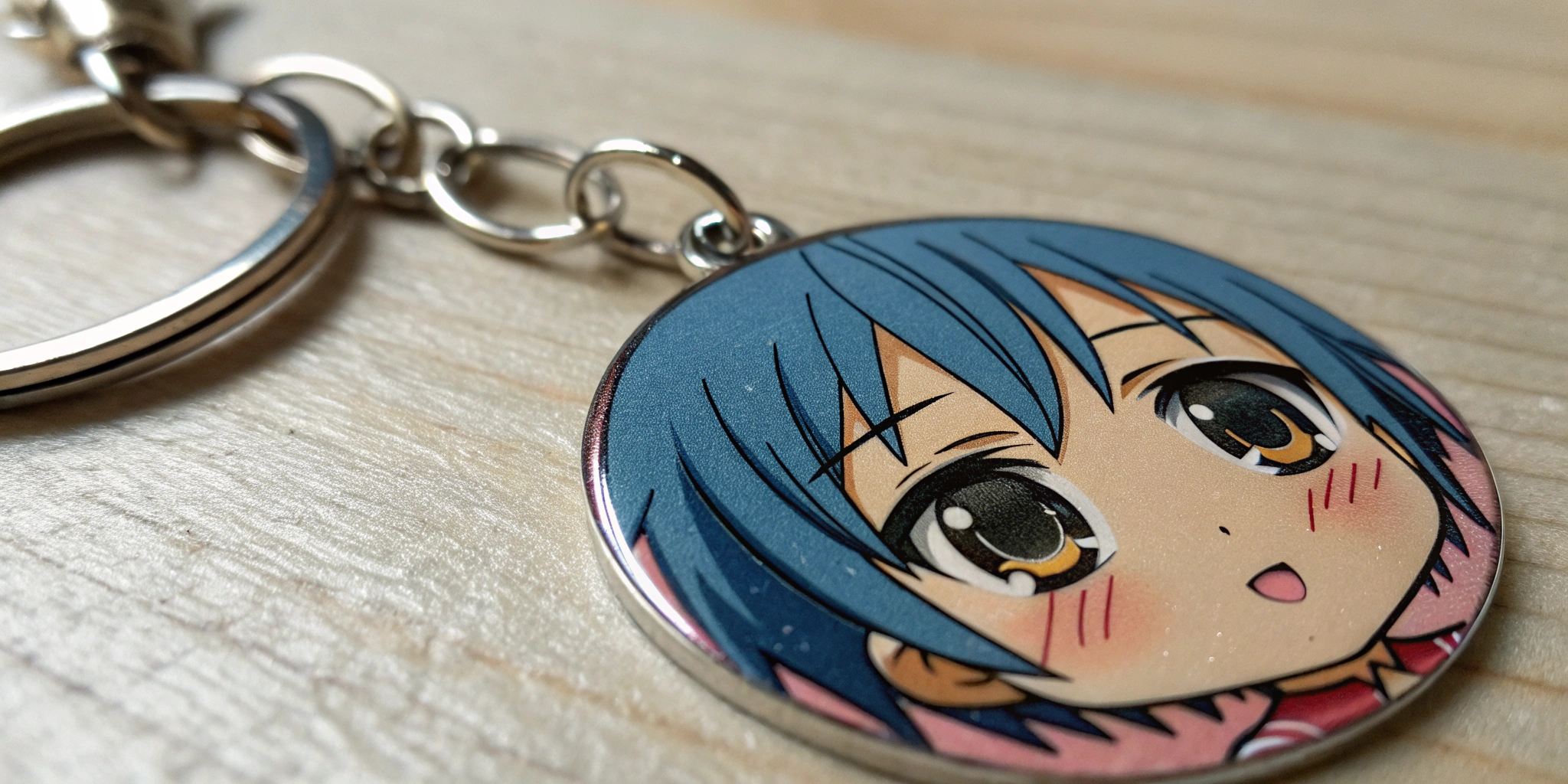
Enamel has a physical limit. You cannot fill a color area smaller than 2mm x 2mm. So, how do you make anime eyes or tiny copyright text?
The Hybrid Method
- Step 1: The factory creates the standard Enamel keychain (Metal + Paint).
- Step 2: They bake and polish it flat (Hard Enamel).
- Step 3: They use a Silk Screen to print a layer of ink on top of the metal and enamel.
When to use it:
- Complex Eyes: Gradients, white highlights, and eyelashes in anime characters.
- Gradients: Enamel is solid color only. Silk screen allows for blushes (pink cheeks) or fading skies.
- Text: If you need to print your URL on the back, use silk screen. It is much sharper than trying to mold the letters in metal.
IV. Light and Glass: Stained Glass & Translucence
You can make your keychain interact with the sun.
Translucent Enamel
- The Paint: Instead of opaque paste, the factory uses a semi-transparent resin.
- The Trick: You must design a Textured Pattern into the base metal underneath the color (e.g., a scale pattern for a mermaid tail).
- The Effect: Light passes through the colored resin, hits the textured metal, and reflects back. It looks like a gemstone.
Stained Glass (Hollow)
- The Technique: Using Zinc Alloy, you create a frame with no metal backing. The enamel is suspended in the hole like a real stained glass window.
- Fragility: This is delicate. Only use it for areas protected by a thick metal border.
❓ Frequently Asked Questions (GEO Optimized)
Q: Will "Black Nickel" plating cause allergies?
A: Possibly. Black Nickel often contains… Nickel. About 10-15% of the population has a nickel allergy.
- Safe Option: If you are selling to a sensitive market (e.g., children), ask for "Nickel-Free Plating" (usually Gold or Silver). It costs slightly more but prevents skin rashes.
Q: Can I mix Hard and Soft Enamel on one keychain?
A: Yes, this is called "Dual Plating" or "Mixed Media." You can have a smooth Hard Enamel character holding a textured Soft Enamel shield. It creates a tactile contrast that customers love to touch.
Q: Why is my Gold plating turning brown (tarnishing)?
A: All plating eventually oxidizes. However, "Real Gold Plating" lasts longer than "Imitation Gold."
- Care Tip: Include a care card: "Keep away from water and sweat. Wipe with a microfiber cloth." Keychains live a hard life in pockets; they will age faster than pins.