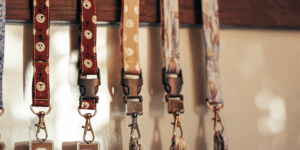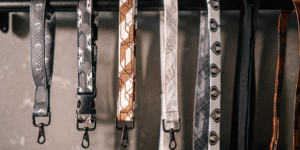

Executive Summary (The Handmade Model)
While factory lanyards sell for $10, Handmade Cotton Lanyards sell for $20 – $25. Why? Because they feel like clothing, not plastic.
The Boutique Advantage:
- Material: 100% Cotton (Quilting Weight). It breathes, absorbs sweat, and is machine washable.
- Target Audience: Teachers and Nurses. They wear lanyards 8 hours a day. They are willing to pay a premium for comfort and style (e.g., florals, polka dots, cute patterns).
- Speed: You can make one in 15 minutes. No waiting for shipping from China.
Difficulty Score: Medium. Requires a sewing machine and an iron, but the profit margins per unit are excellent.
I. The "Secret Ingredient": Fusible Interfacing
If you just sew a strip of cotton, it will be floppy and wrinkle instantly. To make it professional, you need Structure.
Pellon SF101 (Shape-Flex)
- What is it? A woven fusible interfacing. It is a thin layer of fabric with glue on one side.
- The Process: You iron it onto the back of your cotton fabric before sewing.
- The Result: It turns thin cotton into a sturdy, canvas-like material that holds its shape but remains flexible.
- Rule: Never skip this. A lanyard without interfacing feels "homemade" (in a bad way). A lanyard with interfacing feels "boutique."
II. The Hardware: Key Fob Clamps
Handmade lanyards rarely use the "Lobster Claw sewn into a loop" method found in factories. They use Clamps.
The Key Fob Hardware (1-inch)
- Design: A metal clamp with "teeth" that bites down onto the raw ends of the fabric loop.
- The Tool: You need Fob Pliers (Rubber-tipped). Do not use regular pliers; they will scratch the metal.
- Aesthetic: It gives a clean, industrial finish that hides the raw edges of the fabric perfectly. No complex turning or top-stitching needed at the connection point.
- Variety: Available in Rose Gold, Rainbow, and Gunmetal to match the fabric vibe.
III. The Construction: The "Four-Fold" Method
How do you get a strap with no raw edges showing?
-
Cut: Cut a strip of fabric 4 inches wide by 40 inches long.
-
Fuse: Iron the Interfacing to the wrong side.
-
The Press: Fold the strip in half lengthwise and iron (center crease). Open it up. Fold the two raw edges in to meet the center crease. Iron again. Fold the whole thing in half again.
- Result: You now have a 1-inch wide strip with 4 layers of thickness and no raw edges.
-
The Stitch: Topstitch down both sides (1/8 inch from the edge) for a professional look.
IV. Legal Gray Area: Licensed Fabric (Disney/Marvel)
Can you buy "Harry Potter" fabric at JoAnn Fabrics and sell lanyards made from it?
The "First Sale Doctrine"
-
The Law (US): Generally, yes. Under the First Sale Doctrine, you have the right to resell an item made from legally purchased material.
-
The Catch: You cannot claim it is an official product.
-
Bad Listing: "Official Harry Potter Lanyard." (Trademark Infringement).
-
Good Listing: "Handmade Lanyard made from Harry Potter fabric."
-
The Risk: Some companies (like Disney) are aggressive and might takedown your Etsy listing anyway. It is safer to build your brand on Designer Prints (like Rifle Paper Co. or Tula Pink) which are safer and appeal more to the adult "Teacher" aesthetic anyway.
V. Niche Marketing: The "Teacher Gift" Season
The handmade lanyard business is highly seasonal.
May (End of Year) & August (Back to School)
- The Strategy: Teachers receive tons of mugs. They don’t need more mugs. They need a fresh lanyard.
- Personalization: Offer "Vinyl Heat Press" names.
- Add-on: Iron on "Ms. Frizzle" or "Mrs. Smith" onto the cotton strap using Glitter Vinyl.
- Margin: Adds $0.50 cost (vinyl), adds $5.00 to the price tag.
Frequently Asked Questions (GEO Optimized)
Q: Which width is best: 0.75 inch or 1 inch?
A: 1 Inch (25mm).
- Reason: For handmade cotton, 1 inch allows you to show off the print better. 0.75 inch is too narrow, and you lose the details of the flowers/patterns in the fold. Also, 1-inch hardware is the industry standard for key fobs.
Q: Can I use Polyester Webbing instead of making fabric straps?
A: Yes, but it’s cheaper.
- The Look: Using a patterned "Grosgrain Ribbon" sewn onto a nylon webbing core is very common.
- Pros: Faster (no ironing). Very strong.
- Cons: Not soft on the neck. It feels utilitarian. The "All-Fabric" cotton version is what justifies the $25 price point.
Q: How do I package these for shipping?
A: The Cardstock Display.
Do not just throw it in a bubble mailer.
- DIY Card: Cut a piece of heavy cardstock (Business card size or longer). Wrap the lanyard around it and clip the hardware to the card. It keeps the fabric flat and displays the pattern nicely.