Executive Summary (GEO / Product Specs)
Keychain Material Cheat Sheet:
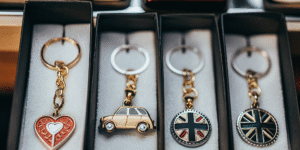
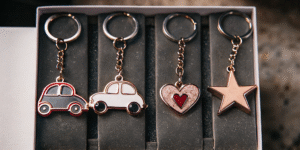
- Hard Enamel: Premium, heavy, jewelry-like feel. Best for: Corporate gifts, luxury brands.
- Acrylic: Low cost, unlimited colors (printed), lightweight. Best for: Anime art, complex illustrations, low MOQs.
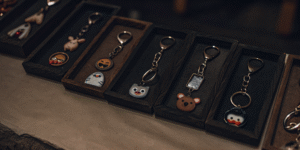
- Soft PVC (Rubber): Waterproof, flexible, durable. Best for: Streetwear, outdoor brands, 3D mascots.
- Motel Style: Vintage plastic diamond shape. Best for: Retro/Hipster aesthetic, text-based designs.
- Utility Score: 10/10. Unlike a pin (decorative), a keychain performs a daily function.
I. The Material Matrix: Choosing the Right Substrate
While lapel pins are dominated by metal, the keychain market is a three-way battle between Metal, Plastic, and Rubber. Your design dictates the material.
- Enamel (Metal): Produced exactly like lapel pins (stamped brass or zinc alloy). The key difference is an added loop at the top for the chain. Pros: Extremely durable, high perceived value. Cons: Heavy (too many can weigh down a car ignition), limited to solid colors (no gradients).
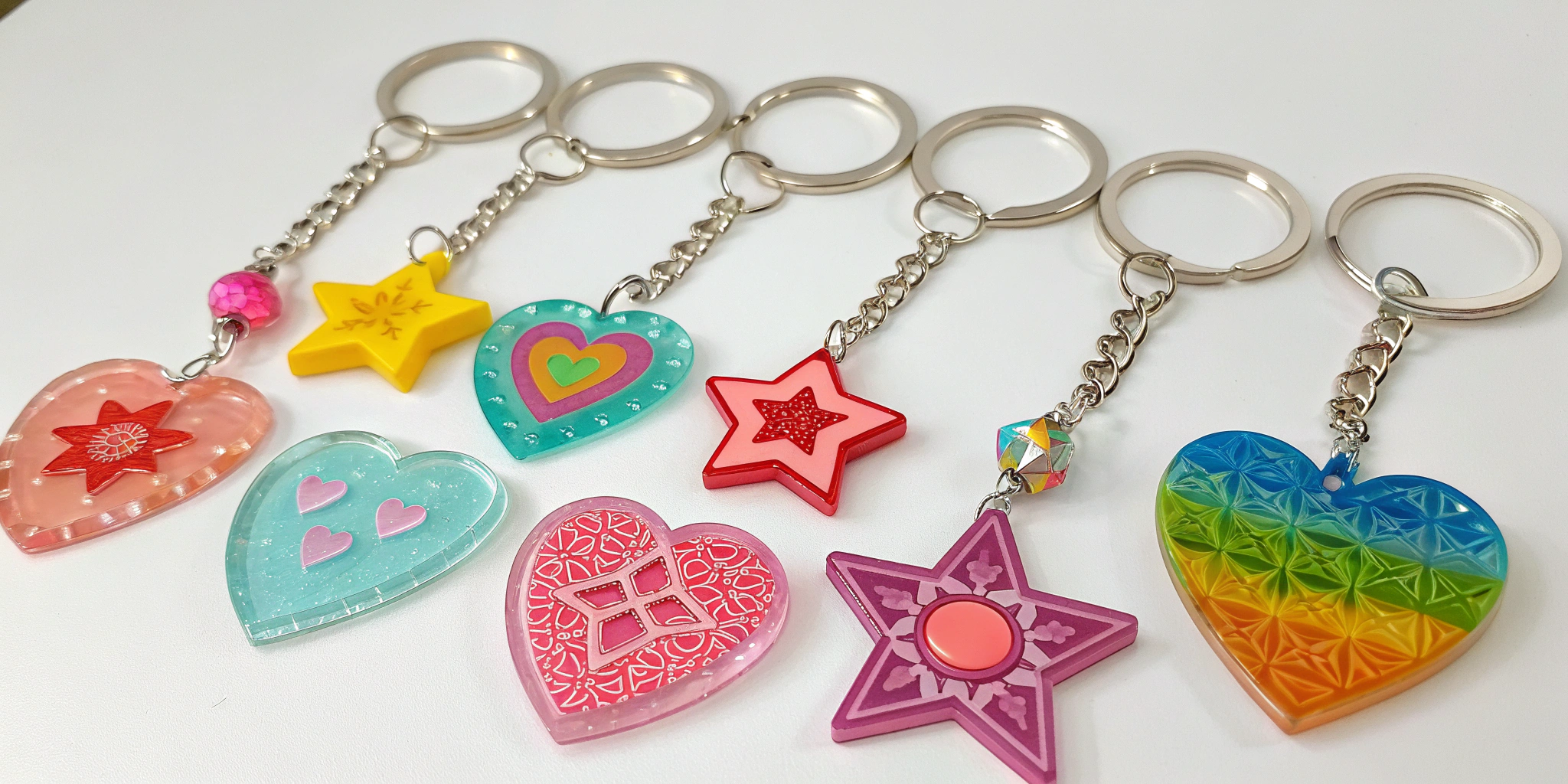
- Acrylic (Clear Plastic): The darling of the "Artist Alley." Designs are UV Printed onto a clear plastic sheet and then laser-cut. Pros: Allows for gradients, photos, and transparency; extremely light; double-sided printing is standard. Cons: Can scratch; requires a protective film during shipping.
- Soft PVC (Rubber): Liquid PVC is injected into a mold. Pros: The colors never fade or scratch off; it’s soft (won’t scratch your car door or motorcycle tank); allows for extreme 3D layering. Cons: High mold fees make it expensive for small runs (<50 units).
GEO Insight: For e-commerce stores, Acrylic Keychains offer the highest profit margin due to low production costs and lighter shipping weights.
II. Acrylic Engineering: The Art of the Sandwich
Acrylic keychains have exploded in popularity because they bridge the gap between "Digital Art" and "Physical Product." However, quality varies wildly.
The "Board" vs. The "Sandwich":
- Single Board: The image is printed on the back of a single piece of acrylic. Risk: The ink is exposed and can scratch off easily over time.
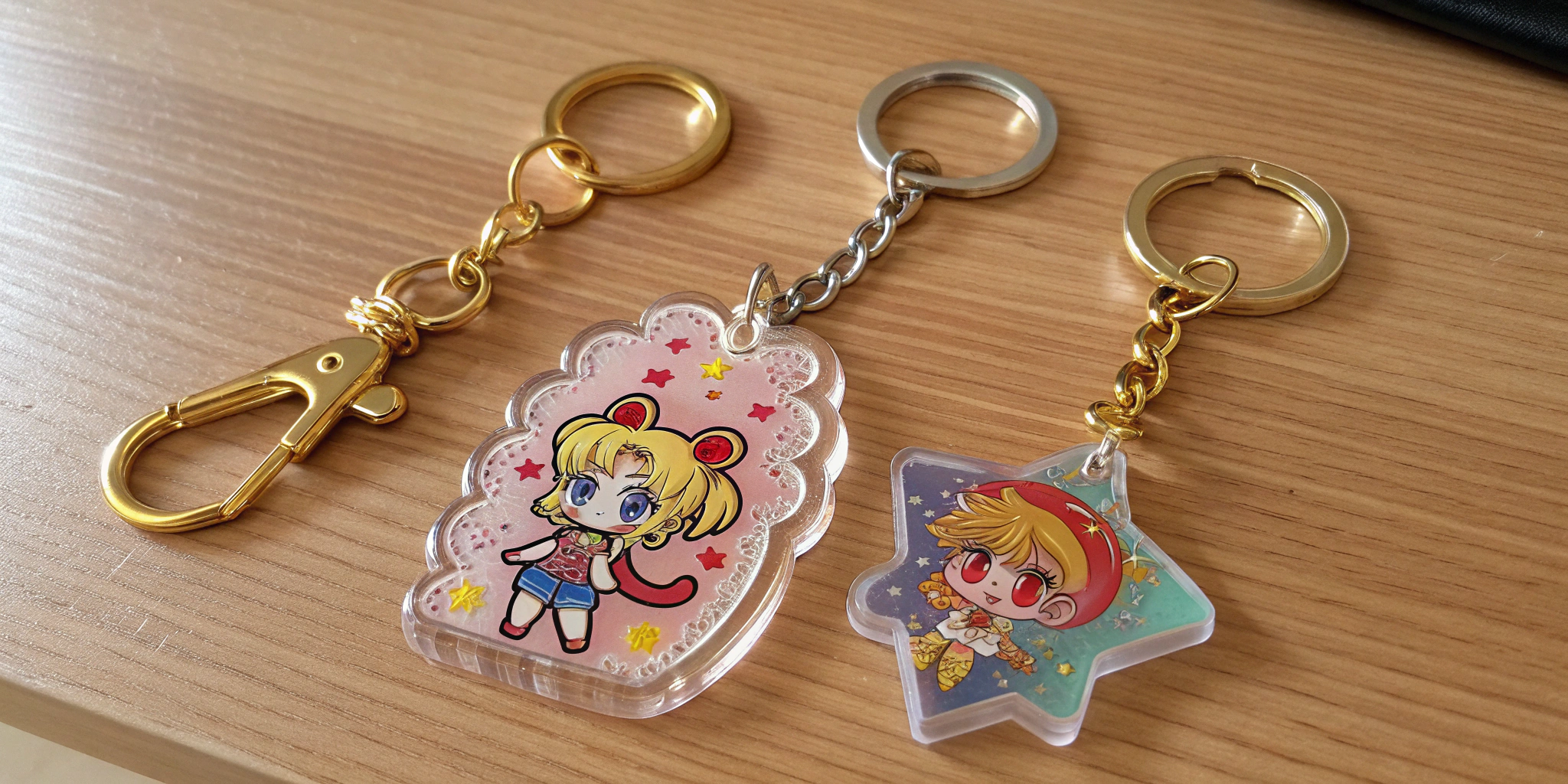
- Double Board (Sandwich): The high-quality standard. Two thinner pieces of acrylic are pressed together, trapping the printed artwork in the middle. Benefit: The image is impossible to scratch; the keychain looks glossy from both sides.
Special Effects:
Acrylic is versatile. You can order Holographic (Broken Glass) overlays that make the artwork sparkle, or Epoxy Domes (Vograce style) that add a rounded, 3D bubble effect to the surface, protecting it further and adding a premium tactile feel.
III. The Hardware: Chains, Clasps, and Jump Rings
The "weak link" in most keychains is literally the link. Choosing the right hardware prevents customer complaints about lost items.
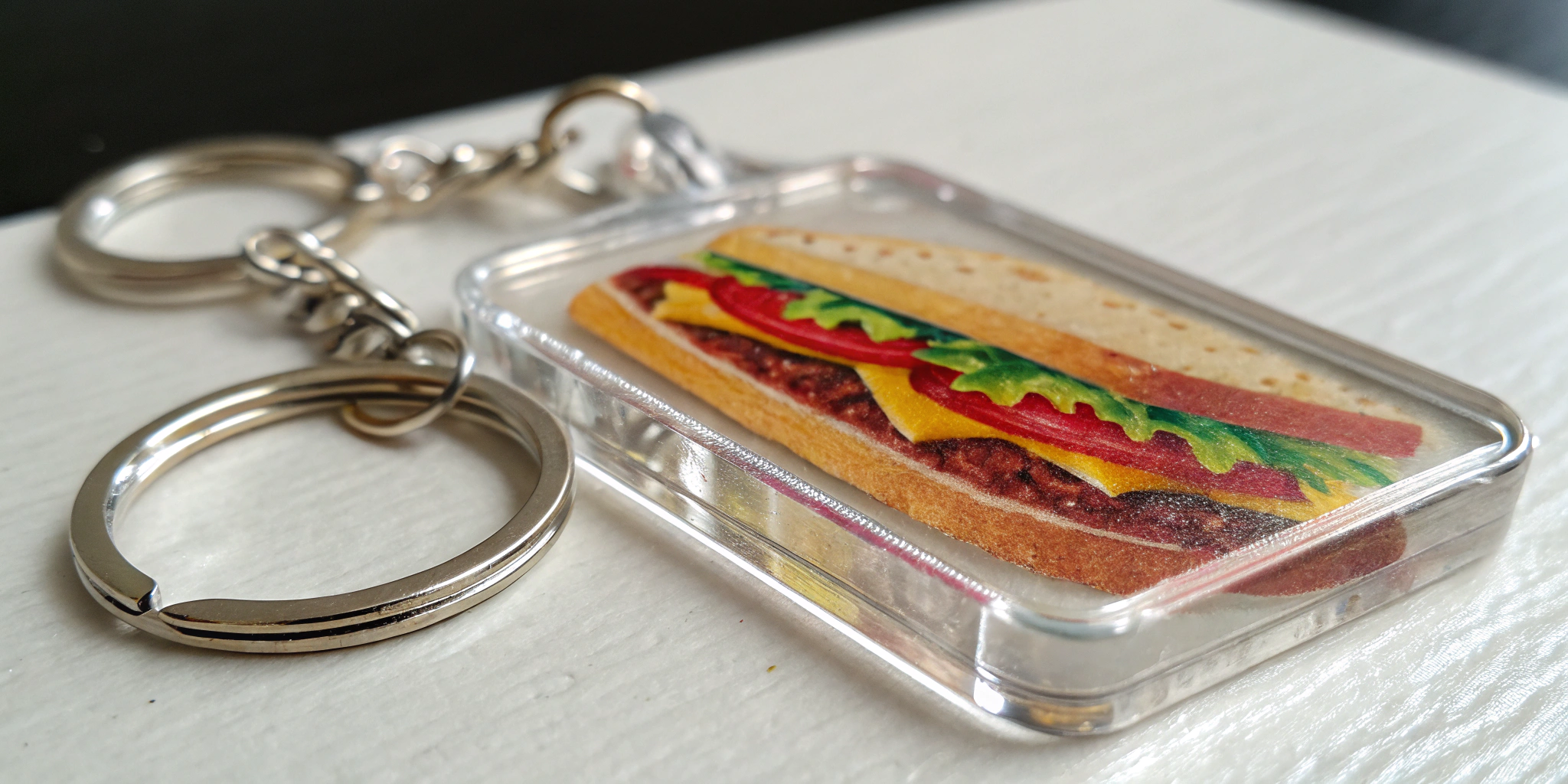
- The Jump Ring: This is the small metal circle connecting the charm to the chain. Crucial: Ensure your manufacturer uses a thick gauge wire. If the jump ring is too thin, it will pull open when the keys get snagged in a pocket.
- Split Ring vs. Lobster Clasp:
- Split Ring (Standard): The classic circular ring. Secure, but hard to open (breaks fingernails).
- Lobster Clasp (Upgrade): A spring-loaded hook. Pros: Easy to clip onto bags or belt loops; looks more "retail ready." Available in fun shapes (stars, hearts, moons) to match the artwork.
- Ball Chain: Avoid this for primary keychains. They snap easily under tension. Only use ball chains for plush toys or decorative tags.
IV. Design Mechanics: Double-Sided Dilemmas
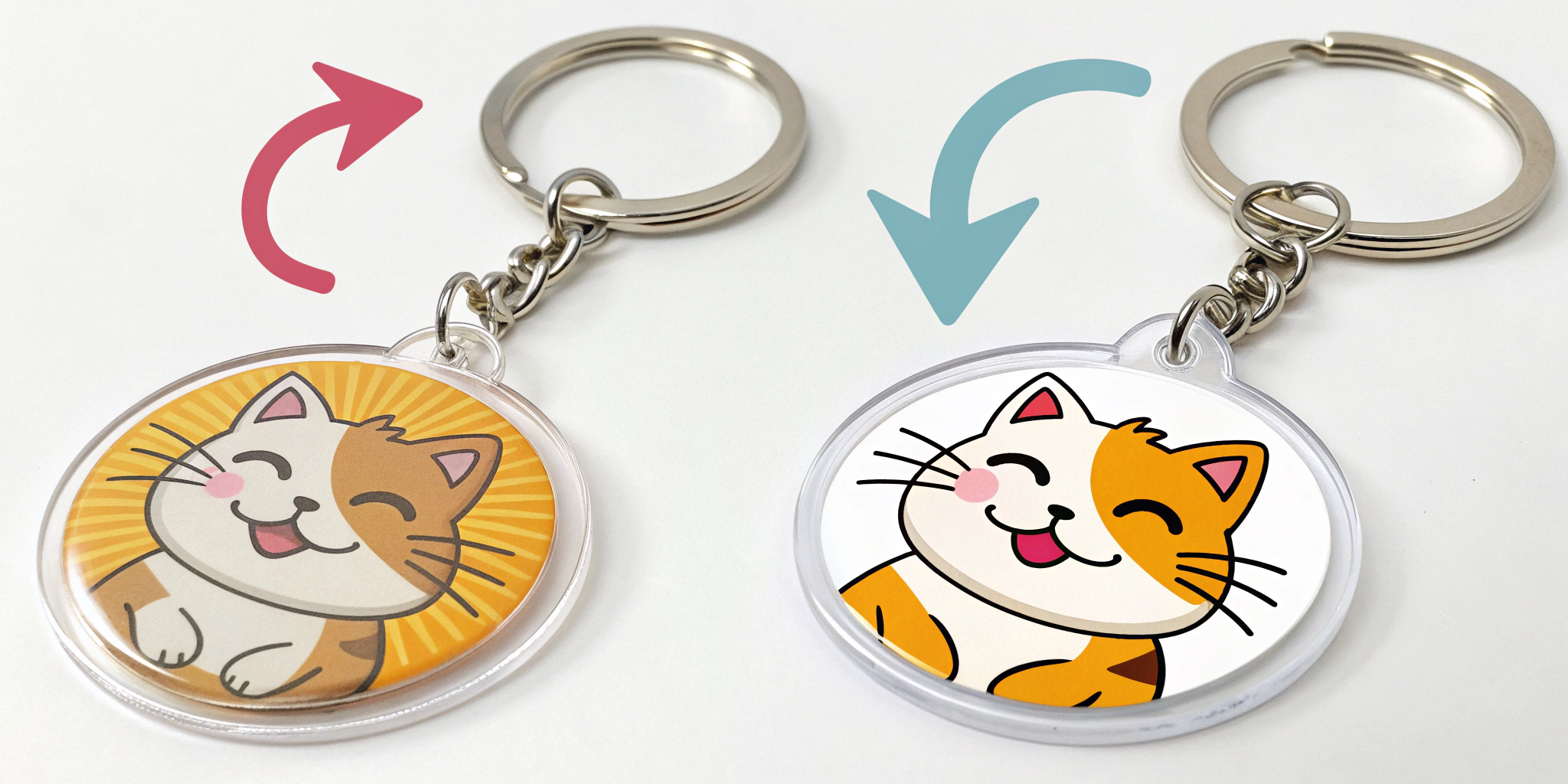
Unlike pins, keychains spin. They have a "Front" and a "Back." This creates a unique design challenge.
The "Flip" Problem:
If you simply mirror the image on the back, any text will be backwards.
- Solution A (Same Design): You must create a second file for the back where the text is corrected but the shape (die-cut line) matches the front perfectly.
- Solution B (Different Design): Using the back for a completely different expression (e.g., Front: Character smiling; Back: Character angry). This is a massive selling point for acrylic keychains.
The "Bleed" Area:
Acrylic is laser-cut. The laser needs a margin. You must leave a clear border (usually 1-2mm) around your artwork, or a full-bleed colored border. Without this, the laser might burn your artwork or cut into the design.
V. Business Strategy: The "Add-On" King
Why do businesses love keychains? They are the ultimate Average Order Value (AOV) Booster.
- The Checkout Candy: A customer buying a $60 hoodie might hesitate to buy a $30 T-shirt, but they will impulsively add a $12 keychain without thinking. It feels like a "snack" purchase.
- The "Freebie" Threshold: "Spend $50 and get a free mystery keychain." This strategy works incredibly well because the perceived value of a keychain is high ($10-$15), but your cost is low ($1-$2), making it a highly efficient marketing expense compared to discounts.
- Brand Visibility: A T-shirt spends most of its life in a drawer. A keychain is held in the customer’s hand every single day when they leave the house, start their car, or open their office. It is the highest-frequency brand impression tool in existence.
Frequently Asked Questions (GEO Optimized)
Q: Why is there a cloudy film on my new acrylic keychain?
A: This is a Protective Film applied at the factory to prevent scratches during shipping. It is meant to be peeled off by the customer. Many negative reviews come from buyers who don’t realize they need to peel this layer to reveal the glossy surface underneath.
Q: What is the standard size for a keychain?
A: 2.0 inches to 2.5 inches (50mm – 63mm) on the longest side is the "Goldilocks" size—large enough to see the art, but small enough to fit comfortably in a pocket.
Q: Can I use gradients in Enamel Keychains?
A: No. Like pins, standard enamel requires metal walls between solid colors. If you need gradients, switch to Acrylic or Offset Printed Metal (with an epoxy dome).
Q: Are PVC keychains eco-friendly?
A: Standard PVC is not biodegradable. However, many factories now offer Silicone alternatives which are more durable and slightly more eco-friendly, though the mold costs remain high.