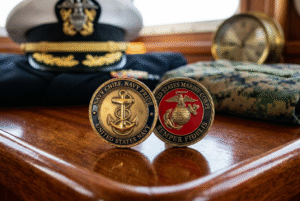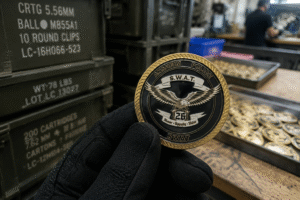
Are you struggling to understand challenge coin printing methods? Choosing the wrong finish ruins your design and wastes money. I will help you pick the perfect style for your project.
Challenge coin printing refers to applying colors and details to metal coins. Soft and hard enamel offer classic, durable metal textures. UV printing allows for full-color, complex gradients and photo-realistic images directly on the metal surface. Choosing between them depends entirely on your specific artwork requirements.
When clients ask me about making custom coins, they often get confused by the word "printing." Let us clear up this confusion so you can order with confidence.
Understanding Challenge Coin Printing: Die Casting vs. UV?
Do you want custom coins but hate flat designs? Standard printing can look cheap. Discover how die casting and UV printing work together to make your coins stand out.
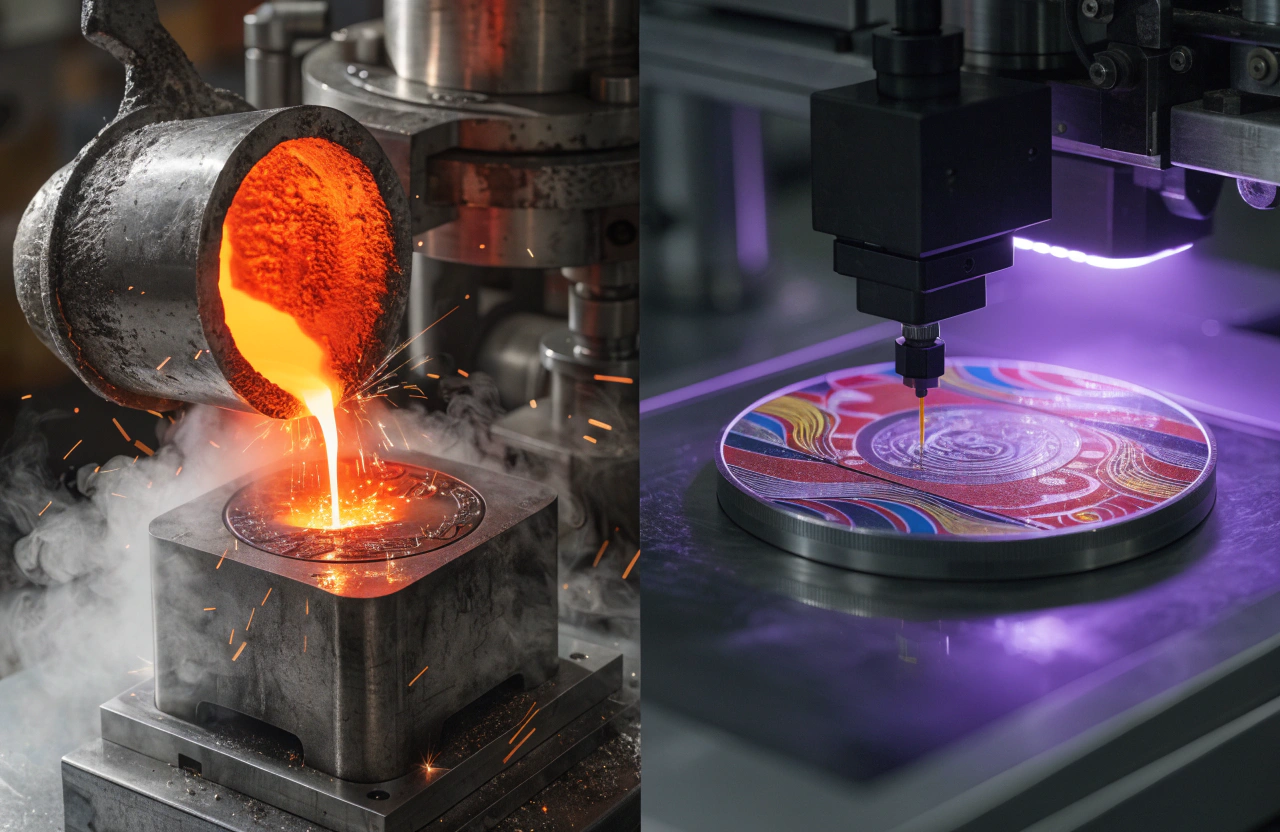
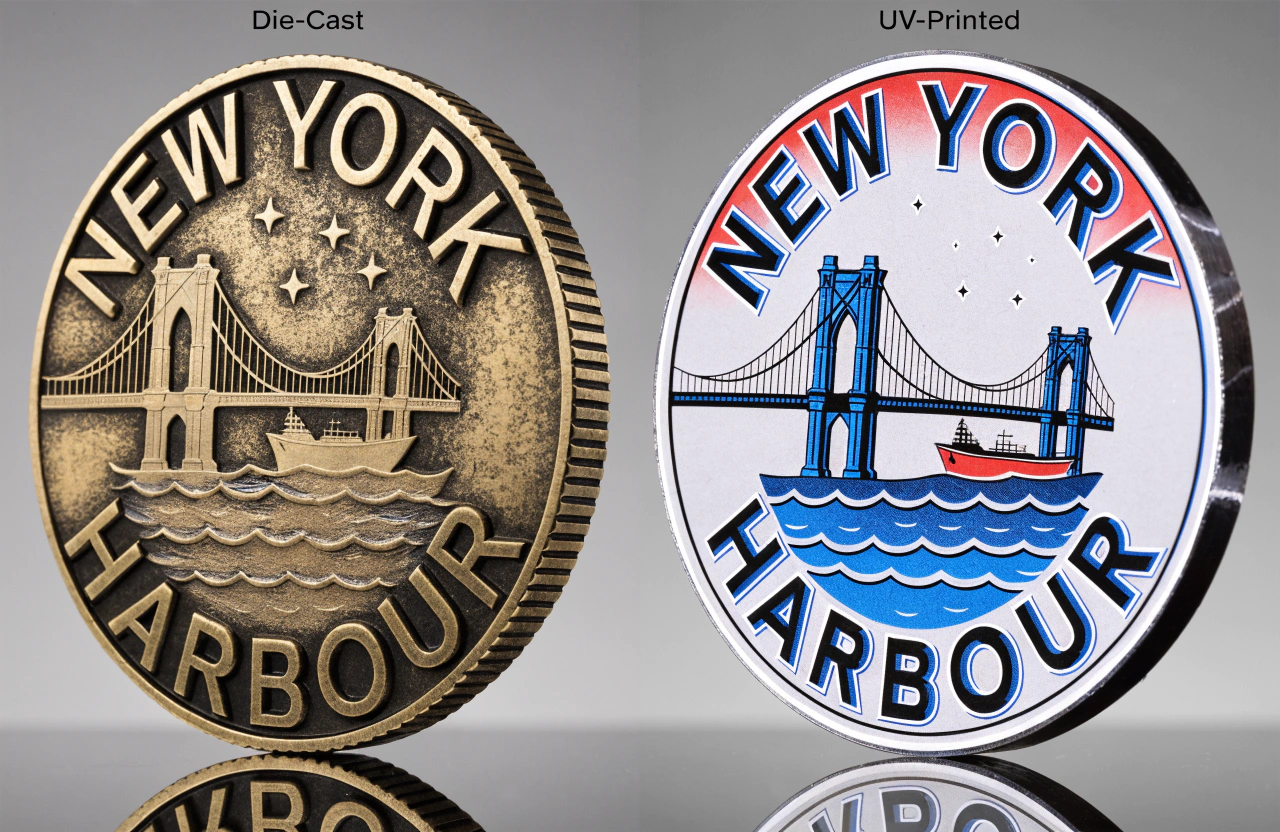
Die casting creates 3D metal ridges and recessed areas on your coin. UV printing applies ink directly onto the flat metal surfaces. We use die casting for shape and structure, while we use UV printing to add complex, full-color images without metal borders.
The Core Differences in Coin Manufacturing
Many new buyers think we just print ink on flat metal blanks. At challengeCoinsBD, we do much more. First, we use die casting. This process uses high pressure to push hot liquid zinc alloy into a steel mold. This creates the heavy, 3D metal base of your custom coin. It gives the coin its classic weight and raised metal borders.
After we make the metal base, we add colors. Traditional challenge coin printing uses liquid enamel filled into the recessed areas. However, UV printing is different. We use a special machine to spray ink onto the smooth metal. Then, an ultraviolet light dries the ink instantly. This means we can print actual photos and gradients.
I remember a client who wanted a beautiful sunset photo on a coin. Enamel could not do this. We used UV printing, and they loved the final result. Here is a simple breakdown of the two methods.
| Feature | Die Casting | UV Printing |
|---|---|---|
| Primary Function | Creates metal shape and 3D texture | Adds full-color flat images1 |
| Materials Used | Liquid zinc alloy or brass | UV-cured digital ink |
| Best For | Outlines, logos, heavy feel | Photos, gradients, tiny text |
| Cost | Requires a custom mold fee | No extra mold fee for colors |
Pros and Cons of Different Coin Printing Methods?
Are you worried your coin will look bad? Picking the wrong color method leads to ugly results. Compare the strengths and weaknesses of each option to avoid costly mistakes.
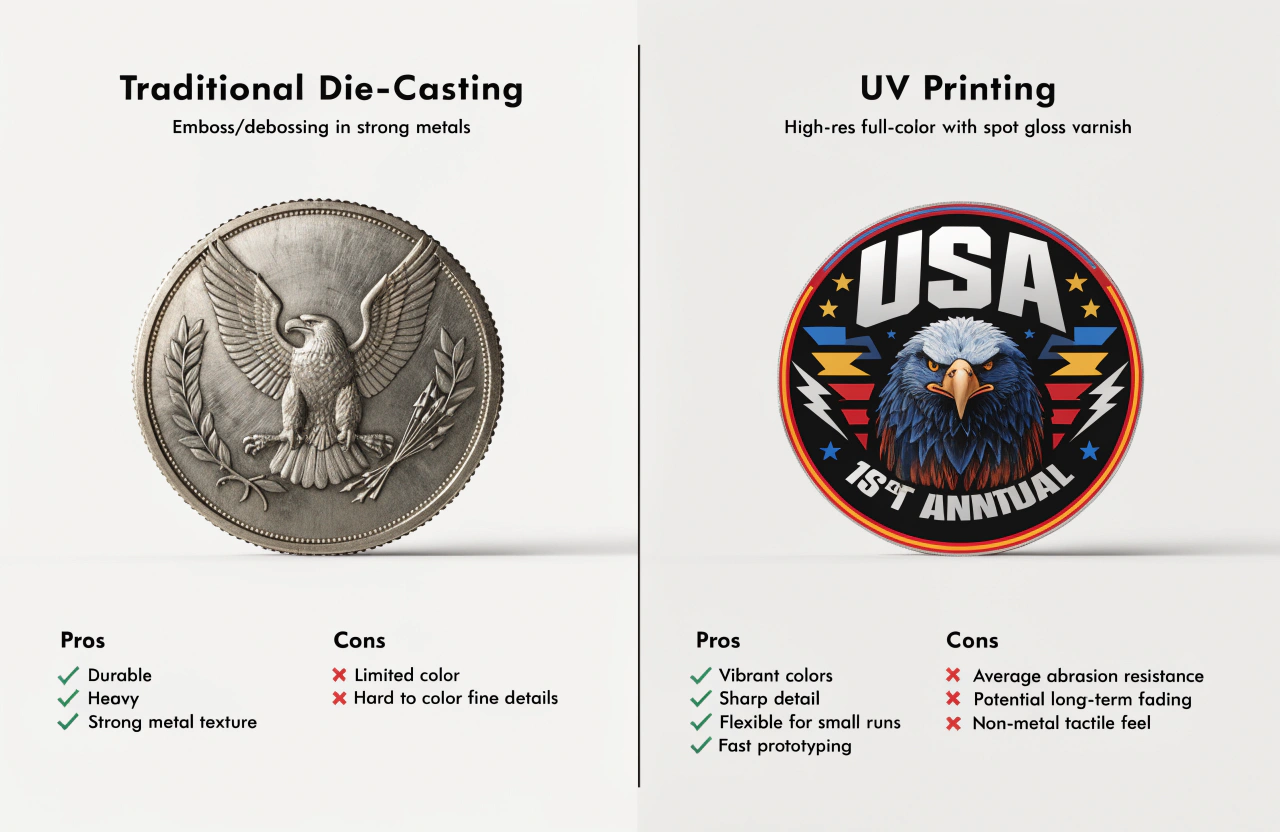
UV printing2 is perfect for complex gradients and small text, but it lacks the classic metal feel. Soft and hard enamel offer a durable, traditional metal texture, but they cannot handle color mixing. Your choice depends on whether you value classic style or detailed pictures.
Weighing Your Color Options
When you buy from our factory in Bangladesh, you get low costs and great quality. But you still need to choose the right process. Let us look at soft enamel, hard enamel, and UV printing.
Soft enamel3 is very popular. We fill the recessed metal areas with paint. The metal borders stay raised. You can feel the texture when you touch it. Hard enamel is similar, but we polish it flat. It feels smooth like glass and looks very high-end. Both enamel types give a classic challenge coin look. However, they only use solid colors. We cannot blend colors in enamel.
UV printing is modern. It works like a regular office printer but on metal. It is the best choice for complex designs. If your company logo has a color gradient, we must use UV printing. But UV ink can scratch easier than hard enamel if you drop the coin on rough ground.
| Printing Method | Big Pros | Big Cons |
|---|---|---|
| Soft Enamel | Great 3D feel, classic look, very cheap | Cannot do color gradients, dirt can get in |
| Hard Enamel | Very smooth, highly durable, premium look | Most expensive, only solid colors |
| UV Printing | Perfect for photos, fast production | Feels flat, can scratch over time |
How to Choose the Best Printing Process for Your Design?
Are you stuck on which option to choose? Guessing can ruin your custom project. Use a simple checklist to match your artwork with the perfect manufacturing process today.
Look at your artwork to choose the right process. If your design has solid colors and clear lines, choose enamel. If your design has photos, lots of colors, or tiny text, choose UV printing. We provide free design help to make this choice easy for you.
Making the Final Choice for Your Order
I know this can feel hard. As a B2B buyer, you want to make sure your clients or team are happy. At challengeCoinsBD, my team offers free design service. We will look at your logo and tell you the best option. But it helps if you know the basics.
First, count your colors. If you have more than seven solid colors, enamel can get expensive. UV printing does not care how many colors you have. Second, check your details. If you have a long quote in tiny letters, enamel will look messy. The metal borders take up too much space. UV printing can print very tiny, clear letters.
Third, think about your budget and timeline. Enamel takes a bit longer to dry and polish. We work fast in our Bangladesh EPZ factory, but UV printing is even faster because the ink dries right away.
Design Checklist Guide
| Design Element | Recommended Process | Why It Works |
|---|---|---|
| Simple Logo | Soft Enamel | Classic feel and budget-friendly |
| Military Seal | Hard Enamel | Durable and traditional quality |
| Real Photo | UV Printing | Exact digital copy on metal |
| Tiny Letters | UV Printing | Ink prints much finer than metal lines |
Conclusion
Custom challenge coin printing is easy when you know the difference between enamel and UV. Choose enamel for classic metal feels and UV for complex photos. Contact challengeCoinsBD today.
-
Learn how UV printing reproduces photos, gradients and fine detail on metal surfaces without enamel limitations for vibrant coin art. ↩
-
Learn when UV printing is best for photo-like gradients, its wear limits, and practical tips to protect printed metal surfaces. ↩
-
Discover why soft enamel gives a tactile 3D feel, stays budget-friendly, and how it compares to hard enamel on appearance and care. ↩