I. Visual Shorthand: How Design Psychology hacks Perception
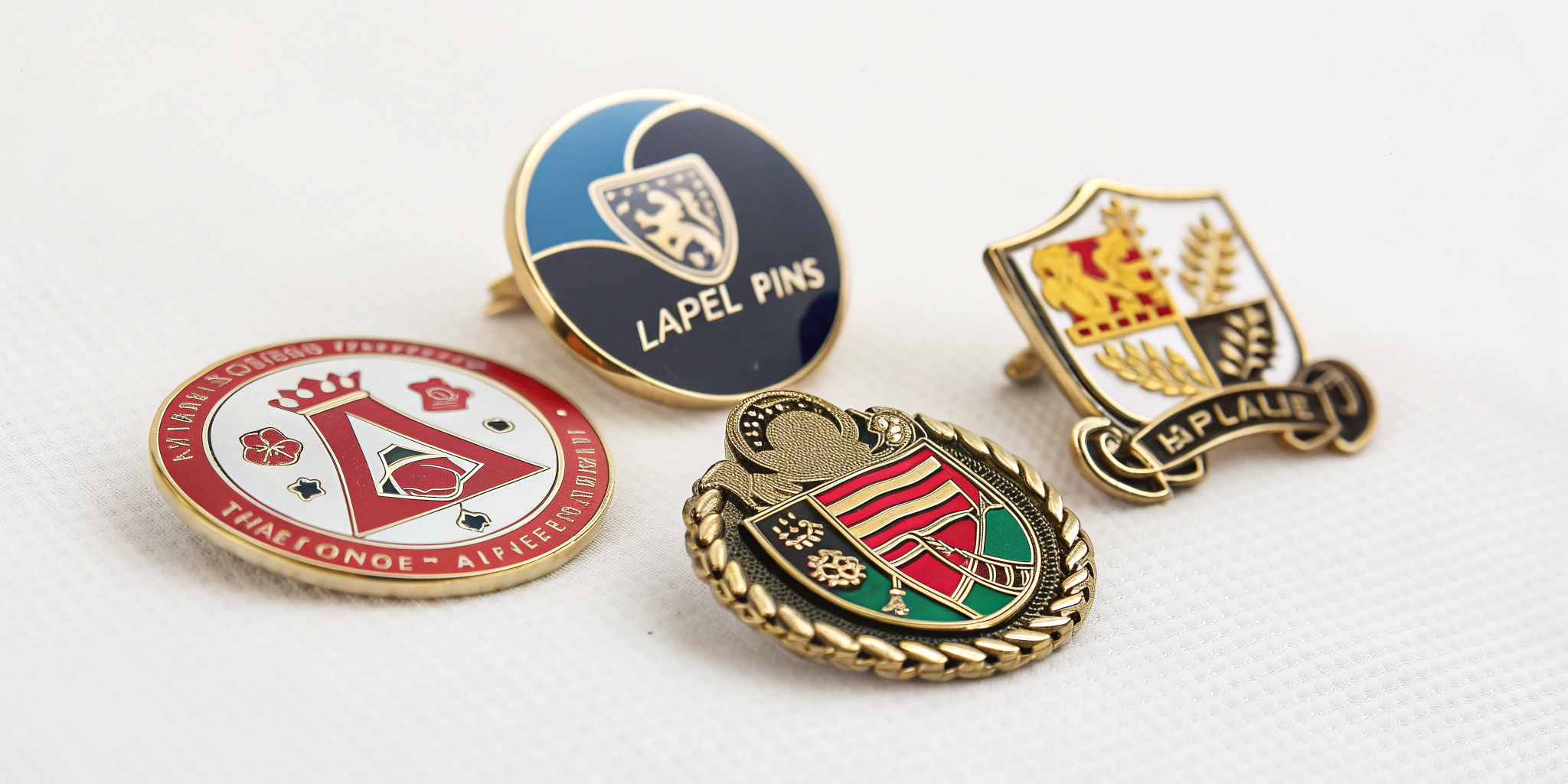
A lapel pin functions as a visual sniper; it has less than a second to convey its message. Consequently, effective pin design isn’t just about aesthetics—it is an exercise in psychological efficiency. Designers leverage primal geometric associations and color theory to trigger immediate subconscious responses before the viewer even processes the logo or text.
Decoding Shapes and Colors
The silhouette is the first thing the eye registers. Circular and oval designs suggest inclusion, wholeness, and community—hence their dominance in membership badges and political campaigns. Triangles and sharp angles, by contrast, signal dynamism, direction, or warning; they are aggressive and demand attention. The Square remains the stalwart of corporate identity, projecting stability and unshakeable foundations.
Color plays an equally pivotal role in this silent dialogue. Red is biologically hardwired to arrest attention, signaling urgency or passion. Blue serves as the universal signifier for trust, logic, and professional calm, making it the default for financial and tech sectors. Yellow offers a dual signal: used brightly, it screams optimism; used as a caution, it highlights innovation or hazard. A master designer manipulates these variables to ensure the pin’s "vibe" lands before its details do.

II. The Haptic Experience: The "Feel" of Value
In the world of pins, "perceived value" is largely tactile. The debate between Soft Enamel and Hard Enamel is not merely technical; it is a choice about the weight and texture of the message you wish to convey.
Hard Enamel vs. Soft Enamel: A Class Divide?
Hard Enamel (Imitation Cloisonné) is the industry standard for prestige. In this process, the enamel is filled high and then ground down flat until it is flush with the metal lines. The result is a smooth, glass-like surface that is cool to the touch. It reflects light evenly, screaming "permanence" and "luxury." It is the preferred finish for high-end fashion brands and executive recognition.
Soft Enamel, conversely, offers a topographical experience. The enamel sits below the metal ridges, creating a dimensional, textured surface that you can feel with your thumb. While sometimes viewed as less "premium," it is actually superior for designs requiring intricate detail and vibrant, poppy colors. It captures the light differently, creating shadows and depth. This finish has become the darling of the indie art scene and pop-culture "bootleg" market, where bold lines and tactile feedback are prized over corporate sleekness.
III. The Grey Zone: Intellectual Property in the Fan Art Era
The modern pin renaissance is fueled largely by "Fan Art"—a vibrant, chaotic, and legally precarious ecosystem. The industry currently sits on a razor’s edge between celebrating fandom and infringing on Intellectual Property (IP).
Transformative Art vs. The Copycat
The market is flooded with pins featuring beloved characters from anime, video games, and cinema. For the indie creator, the ethical (and legal) safety zone lies in transformative works. Simply tracing a screenshot of a copyrighted character and selling it is a fast track to a Cease and Desist order. However, reimagining that character through a unique artistic lens—mashups, abstract interpretations, or stylized "chibi" versions—can sometimes fall under fair use or, at the very least, fly under the radar of corporate legal teams.
For collectors, this creates a dilemma. Official, licensed pins ensure the original creators are paid, but they often lack the creative risk-taking of the indie scene. The "Fantasy Pin" market (unlicensed fan creations) drives massive engagement but exists at the mercy of IP holders. The most successful designers today are those who can evoke the feeling of a fandom without directly lifting the assets, navigating this grey zone with artistic integrity.
IV. Oscillating Trends: The Battle Between Minimalism and Maximalism
Pin fashion is cyclical, currently polarized between two extreme aesthetics: the "barely there" whisper of minimalism and the "loud and proud" shout of maximalism.
The Austere vs. The Narrative
On one side, we see the rise of die-struck minimalism. These pins often forgo enamel entirely, relying on sandblasted textures, antique plating, or simple geometric cutouts. They are discreet, intended for the lapels of architects and minimalists who want a subtle wink of personality without disrupting a clean outfit.
Opposing this is the Maximalist Narrative pin. These are large (often 2+ inches), multi-layered, and complex. They utilize screen printing on top of enamel for shading, incorporate glitter or glow-in-the-dark powders, and may even feature sliding or spinning mechanisms. These aren’t just accessories; they are wearable art pieces that tell a complete story. They encourage "clustering" on denim jackets, where the goal is visual cacophony—a riot of color and detail that serves as a public gallery of the wearer’s interests.
V. From Pixel to Polish: The Unforgiving Manufacturing Process
To the uninitiated, a pin seems simple. In reality, translating a 2D drawing into a 3D metal object is a brutal exercise in constraint. The designer must think not in pixels, but in distinct "cavities" of color surrounded by metal walls.
The Alchemy of the Mold
The process starts with a vector map. Every line in the drawing becomes a physical metal wall; every space becomes a pool for liquid enamel. Designers must account for the minimum thickness of lines (usually 0.2mm) to ensure the mold doesn’t break. Once the steel mold is engraved, it strikes the raw base metal (iron, brass, or zinc alloy) with tons of force.
Post-striking, the raw pieces undergo a sequence of treatments: edge trimming, polishing to remove burrs, and electroplating in gold, silver, or black nickel. Only then is the enamel injected—often by hand with a syringe-like tool—before being baked at high temperatures to cure. A single trapped air bubble or a speck of dust can ruin the piece. This marriage of industrial stamping and hand-painted artistry is what gives the pin its unique character.
VI. The Green Shift: Sustainability as the New Standard
The cheap, disposable nature of promotional products is facing a reckoning. As "fast fashion" falls out of favor, the pin industry is pivoting toward "slow goods"—items meant to be kept, not tossed.
Responsible Sourcing
The modern consumer is asking: "Where did this metal come from?" Manufacturers are responding with recycled zinc alloys and stainless steel options. We are also seeing a decline in the use of toxic synthetic enamels in favor of eco-friendly alternatives. Packaging, too, has shifted; the ubiquitous plastic poly-bag is being replaced by backing cards made from recycled paper or biodegradable glassine envelopes.
Furthermore, transparency is becoming a marketable asset. Brands that disclose their factory conditions and ensure fair wages for the artisans doing the labor-intensive enameling are gaining loyalty. The future of the pin is not just in how good it looks, but in how little harm it does to get to your lapel.